Watching your toddler transition from crawling to walking is one of the most exciting stages of early development. This phase, typically between 6 to 18 months, is filled with discovery, movement, and growing confidence.
As little ones begin exploring more independently, creating a safe environment becomes essential. From soft surfaces to supportive tools like grip socks, small adjustments can help toddlers move more securely as they learn to balance and walk.
Pre-Walking Skills: Building the Foundation
Before those first steps, toddlers develop important pre-walking skills. Between 6 to 9 months, babies begin strengthening their arms, legs, and core. This allows them to sit without support, roll over, and eventually pull themselves up to stand.
To support this stage:
- Encourage plenty of tummy time
- Provide safe floor space for movement
- Use toys that promote reaching and grabbing
These activities help build the strength and coordination needed for standing and walking.
Cruising: The First Steps
Around 9 to 12 months, babies often begin “cruising”—walking while holding onto furniture or hands. This stage is essential for developing balance and confidence.
You can support your toddler by:
- Arranging furniture to create safe cruising paths
- Offering your hands for support when needed
- Ensuring sharp edges and hazards are minimized
It’s important to let your child move at their own pace while feeling supported and safe.
Walking Independently: The Big Milestone
Between 12 to 18 months, most toddlers take their first independent steps. These early attempts may be wobbly, but with time and practice, confidence quickly grows.
To encourage safe walking:
- Keep floors clear of obstacles
- Use rugs or mats to soften falls
- Celebrate every small success
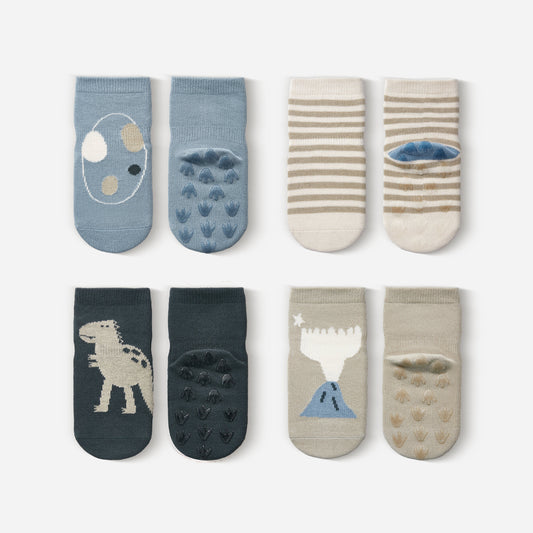
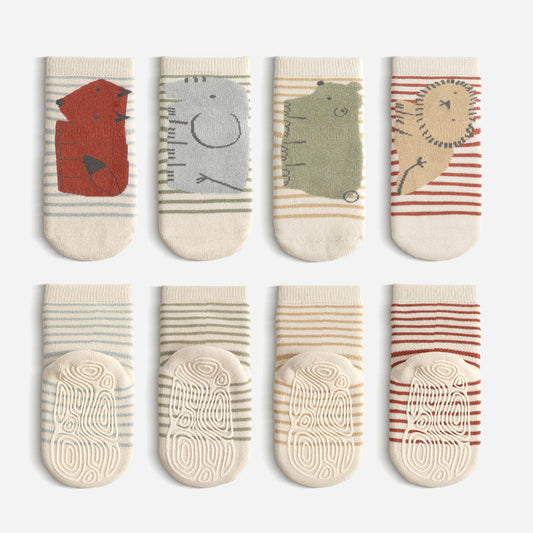
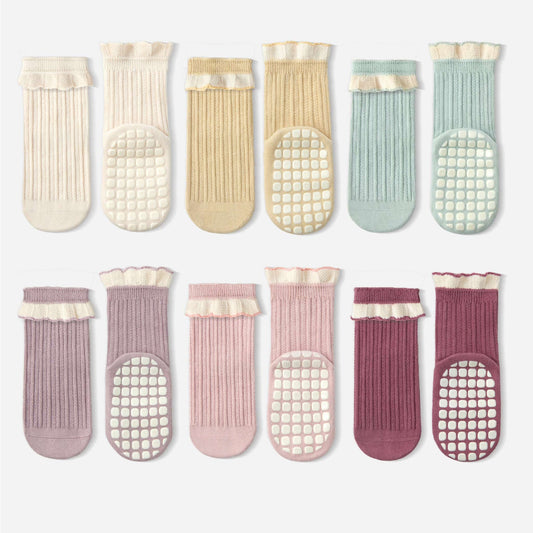
At this stage, stable footing becomes especially important. Wearing non-slip grip socks can help reduce slipping on smooth floors while supporting natural movement and balance.
Confidence in Motion: Enhancing Skills
Once walking is mastered, toddlers quickly move on to running, climbing, and jumping. These activities help refine coordination, strength, and balance.
Encourage continued development by:
- Allowing safe, active play at home and outdoors
- Visiting playgrounds
- Engaging in simple movement-based games
Each new movement builds confidence and independence.
Supporting Every Step Along the Way
Every child develops at their own pace, and that’s completely normal. The key is to provide a supportive, safe, and encouraging environment where your toddler feels confident to explore.
Small details—like safe spaces, encouragement, and the right support tools—can make a big difference in how comfortably your child learns to move.
As your little one learns to walk and explore, giving them the right support can make all the difference. Many parents choose grip socks to help reduce slips and support natural movement during these important early stages.
>> Help Your Toddler Move with Confidence.