As toddlers begin to explore the world on their two little feet, their home becomes a vast landscape full of adventures. For parents and guardians, this phase also raises safety concerns. Creating a secure home environment is essential to ensure that little adventurers can explore, learn, and grow without the risk of injuries. Here are practical and effective strategies to transform your home into a safe haven for toddlers learning to walk.
1. Baby-Proofing Basics
Before your toddler takes those first unsteady steps, conduct a thorough baby-proofing sweep of your home. Secure heavy furniture to walls to prevent tipping hazards, use corner protectors on sharp furniture edges, cover all electrical outlets with safety plugs, and lock cabinets or secure them with child-proof latches, especially those containing harmful substances or breakables.
2. Creating Safe Exploration Zones
Designate specific areas in your home as 'safe zones' for your toddler to explore. Use baby gates to block off kitchens, bathrooms, and staircases, and make sure flooring in these zones is soft to cushion falls. Playmats or soft area rugs provide padding and clearly define safe areas for exploration.
3. Soft, Slip-Resistant Footwear
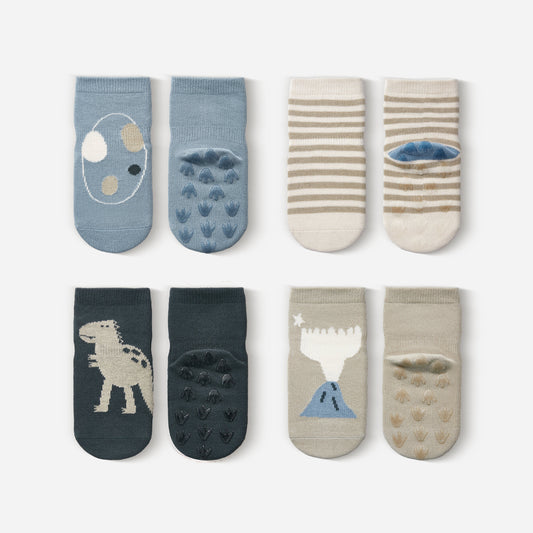
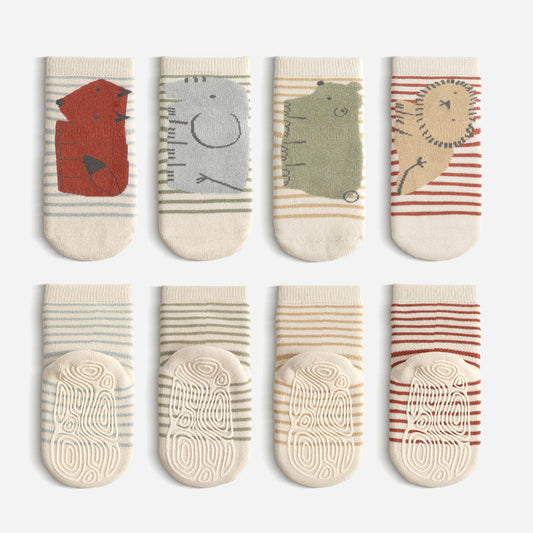
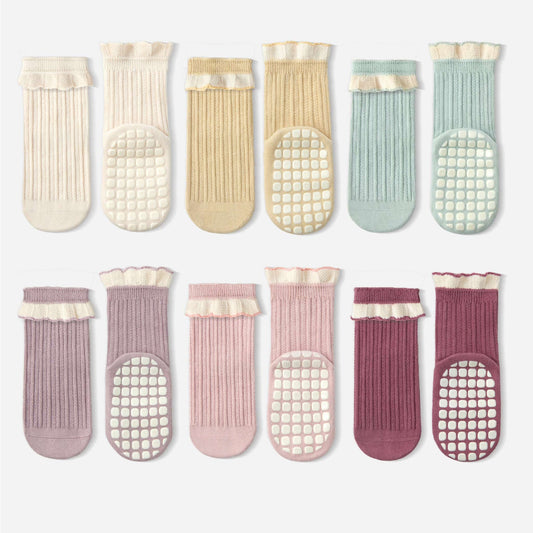
Even in a fully baby-proofed home, toddlers can slip while learning to walk. Adding grip socks provides traction on smooth surfaces, helping them stay steady and confident during play. Soft, flexible, and breathable, they let little feet move naturally while minimizing the risk of slips.
4. The Importance of Supervision
Baby-proofing and safe zones reduce risk, but there is no substitute for vigilant supervision. Always keep an eye on your toddler as they move around. If you need to step away, place them in a secure playpen or crib. Engaging in floor-level play strengthens your bond and lets you monitor interactions with the environment.
5. Educate and Engage
Toddlers are curious explorers. Use this curiosity to teach them about safety. Offer age-appropriate explanations about why some areas are off-limits, encourage safe exploration by guiding them in their safe zones, and show them how to navigate around furniture and interact with toys safely.
6. Regular Safety Checks and Updates
As your toddler grows, their abilities and risks evolve. Reevaluate your home regularly for potential hazards, check that baby gates, latches, and locks are still effective, and adjust safe zones as your toddler develops new skills and mobility.
7. Keep Floors Clear and Clutter-Free
Small objects on the floor can be tripping hazards. Pick up toys after playtime and avoid leaving cords, shoes, or small furniture in walking paths.
8. Use Non-Toxic Materials
Choose materials that are safe if mouthed or touched frequently. Opt for non-toxic paint, sealants, and finishes, and select washable and durable rugs or playmats that are easy to clean.
9. Secure Windows and Doors
Windows and doors can pose serious risks for curious toddlers. Install window guards or locks to prevent falls, and use door stoppers or pinch guards to avoid finger injuries.
10. Encourage Confidence with Supportive Tools
Encourage safe movement using supportive tools such as soft furniture for toddlers to hold onto as they walk, play areas with padded corners and non-slip surfaces, and grip socks for indoor traction and confidence on smooth floors.
LittleYogaSocks: Where Grip Meets Design
LittleYogaSocks embodies the spirit of safe exploration, offering socks that combine grip, quality, and playful design. These grip socks let kids move freely, explore their world, and stay safe indoors—all while enjoying the cute designs they love.
✨ Parent-Friendly Tip: Pairing baby-proofed spaces with grip socks can give toddlers the confidence to take those first steps safely.