Introducing time-outs to toddlers can be a challenging yet rewarding process, as it teaches them about boundaries, self-regulation, and the consequences of their actions. When done correctly, time-outs can be an effective disciplinary tool that encourages good behavior without fostering resentment or fear. Here are practical tips for parents and guardians of babies over 6 months to introduce time-outs in a positive and constructive way.
Understanding the Basics
Before introducing time-outs, it’s crucial to understand what they are—and what they aren’t. Time-outs are not a punishment but a chance for your toddler to calm down and think about their actions.
- Use time-outs sparingly and ensure the duration matches the child’s age (generally one minute per year).
- Explain in simple terms what a time-out means and why it’s happening.
- Remain calm and composed during the process, as your demeanor sets the tone.
Setting Up a Time-Out Space
Select a spot in your home that is safe, quiet, and away from distractions. This should be a neutral area, not a scary or isolating place, where your toddler can sit calmly for a few minutes.
- Introduce the space during a calm moment, explaining its purpose.
- Personalizing the space with a name, such as the “calm down corner,” can make the concept relatable.
Consistency is Key
Consistency is critical for toddlers to understand and respect boundaries.
- Clearly define the behaviors that lead to a time-out.
- Use simple language to explain why a time-out is happening.
- Ensure all caregivers follow the same rules and approach.
- After the time-out, briefly discuss the behavior, reinforcing learning without dwelling on the negative.
Reinforcing Positive Behavior
Time-outs are just one part of guiding behavior. Equally important is praising positive actions.
- Catch your toddler doing something good and acknowledge it.
- Reinforcing positive behavior helps your child understand what actions are expected.
- This balance makes time-outs part of a broader strategy that encourages good behavior through support and recognition.
Embracing Teachable Moments
Time-outs can also strengthen the parent-child connection.
- After each time-out, reconnect with your toddler through a hug or encouraging words.
- Reinforce that while the behavior may not be acceptable, they themselves are always loved and supported.
Supporting Toddlers Safely as They Explore
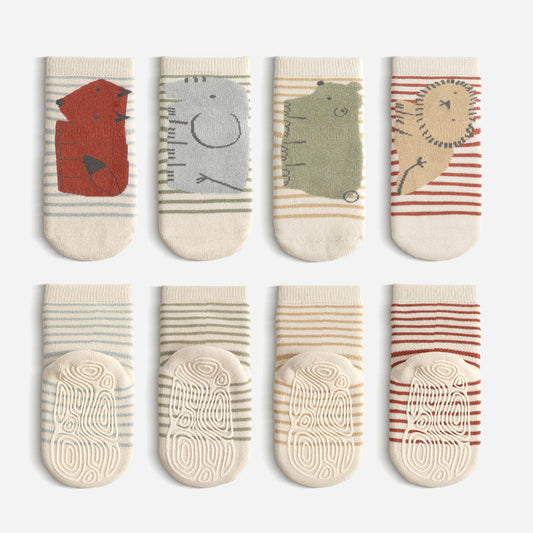
LittleYogaSocks understands that parenting is about balancing discipline with love while letting kids be kids. Our socks are designed with grip, quality, and playful designs that toddlers love. They provide the security your little ones need to explore, learn, and play without the risk of slipping.
Grip socks give toddlers the confidence to move safely, whether they’re in their calm-down corner, exploring indoors, or taking those first adventurous steps.
Give your toddler the freedom to explore safely and confidently with grip socks, letting their adventure continue worry-free.