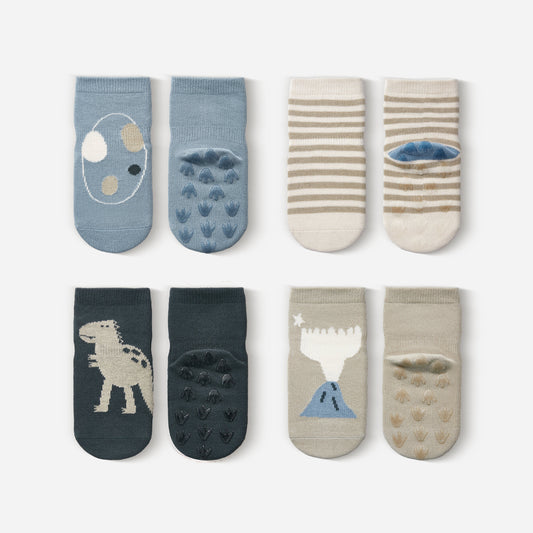
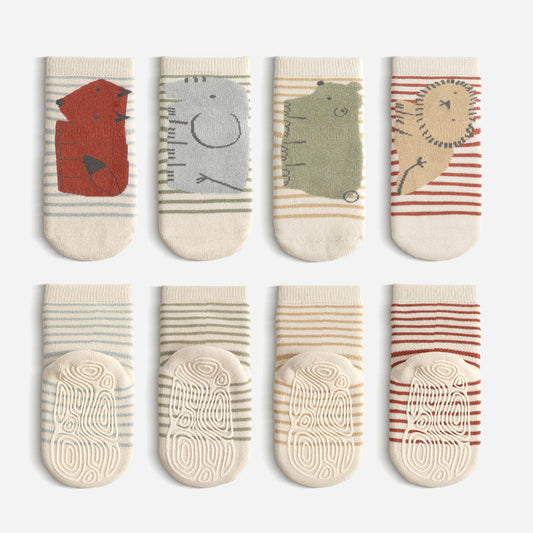
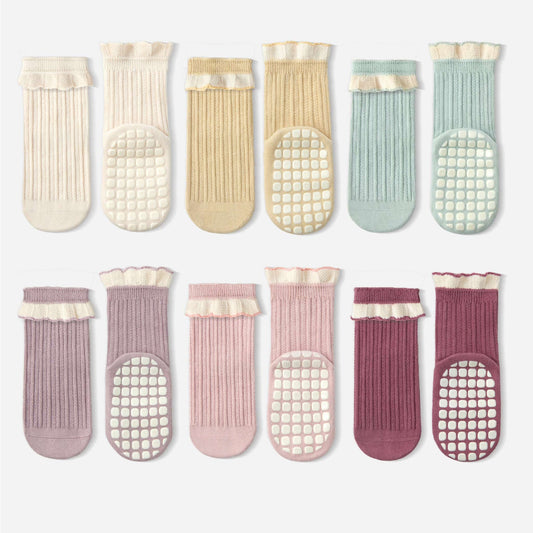
When it comes to nurturing the natural curiosity and mobility of toddlers—especially those over 6 months old—providing a safe and supportive environment is essential.
An often overlooked part of this is footwear. While the wrong materials can restrict movement or create safety risks, flexible options like grip socks can support natural development while keeping little feet protected during indoor exploration.
Let’s explore which materials to avoid—and what to look for instead.
Heavy and Rigid Materials
Shoes made from heavy and rigid materials can significantly restrict a toddler's foot movement. Such materials can alter the natural foot mechanics, leading to poor development of foot muscles and potentially affecting the child's gait pattern. For toddlers, whose feet are in a critical stage of growth, it's essential to choose shoes that mimic the natural flexibility of bare feet. Opting for lightweight, flexible materials allows for the natural strengthening of foot muscles, promoting better balance and coordination as your toddler explores their surroundings.
Slippery Soles
Overly smooth soles can be dangerous for toddlers walking on indoor surfaces like wood or tile. Without proper grip, slips and falls become much more likely.
Instead, look for footwear that provides traction. Non-slip grip socks are a simple and effective option, offering stability on a variety of indoor surfaces while still allowing natural movement.
Synthetic Materials That Lack Breathability
Footwear crafted from non-breathable synthetic materials can create a hot, humid environment for your toddler's feet, leading to discomfort and even skin irritations. Toddlers are more active than we often give them credit for, and their shoes should be able to manage the heat and sweat produced during their indoor adventures. Choosing shoes made from natural, breathable materials like cotton or soft leathers can help keep their feet cool and dry, reducing the risk of fungal infections and maintaining overall foot health.
Harsh Chemicals and Dyes
The excitement of choosing brightly colored and fun-patterned shoes for toddlers can quickly fade when considering the potential harsh chemicals and dyes used in their production. Young children, especially toddlers, often put their feet in their mouths, making the toxicity of their footwear a concern. Shoes made with non-toxic, natural dyes, and materials are a safer choice, ensuring that your child's health isn't compromised for the sake of style.
Stiff Insoles and Lack of Arch Support
A common misconception is that toddlers require shoes with substantial arch support to develop proper foot structure. However, stiff insoles and excessive arch support can actually impede natural foot development. For indoor exploration, shoes with a soft, flexible sole and minimal arch support allow toddlers' feet to grow and develop unencumbered. This supports the natural arch development and contributes to a healthy walking pattern.
A Simple, Safer Alternative for Indoor Play
When it comes to indoor exploration, many parents choose grip socks as a practical alternative to traditional shoes.
With soft, breathable materials and non-slip soles, they provide the flexibility toddlers need while helping prevent slips on smooth surfaces. They’re designed to support natural movement—perfect for growing feet still learning to balance and walk.
👉 Support safe, natural movement at home.